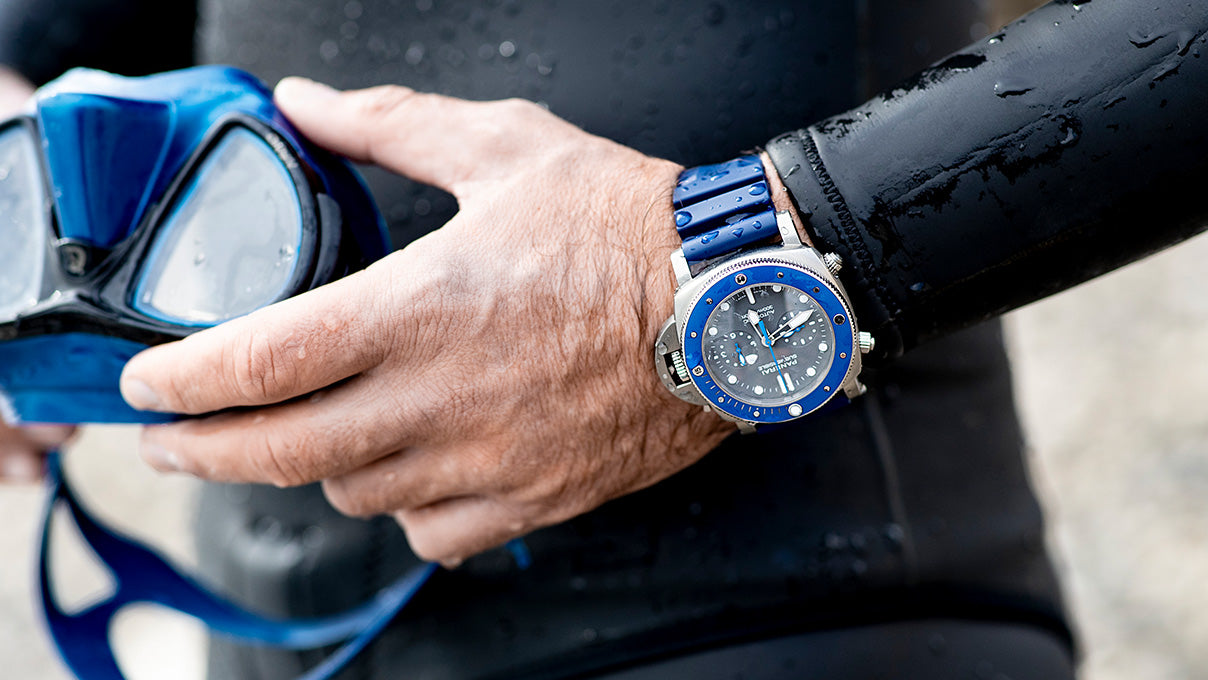
What does water resistance mean on a watch?
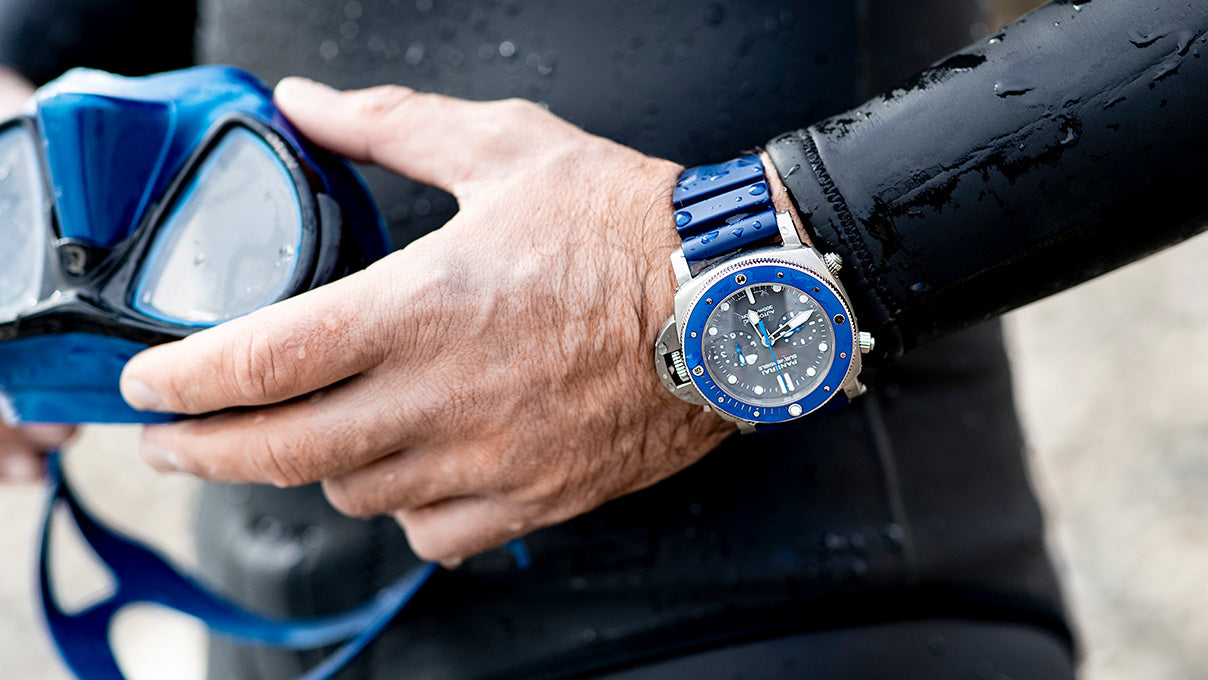
What does water resistance mean on a watch?
When buying a watch, several factors come into play. These include the crystal (mineral or sapphire), the movement (quartz, manual, or automatic), and finally, water resistance. Most modern watches have a water resistance rating that indicates their ability to withstand water. However, it's important to understand that this rating, expressed in meters or ATM (for "Atmospheres"), requires explanation.
The atmosphere, the little-known unit of measurement.
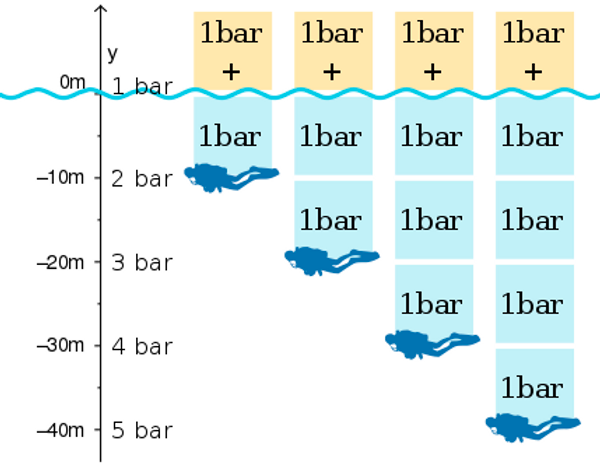
To try and explain this physical process, one atmosphere (1 ATM) is normal sea level pressure, so if a watch has a water resistance of 3 atmospheres (3 ATM), it will remain water-resistant to three times the pressure at sea level. As for the equivalent, one atmosphere is equivalent to 10 meters. It's important to know that a watch's water resistance is tested in a laboratory under optimal conditions, on a fixed support, and with new gaskets. As you can imagine, these are not everyday conditions.
Now that the technical explanations are out of the way, let's move on to the practical application. Generally, watches are offered with water resistance ratings of 1 ATM, 3 ATM, 5 ATM, 10 ATM, 20 ATM, 30 ATM, and finally ISO 6425.
The different levels of water resistance of a watch and practical cases of their use.
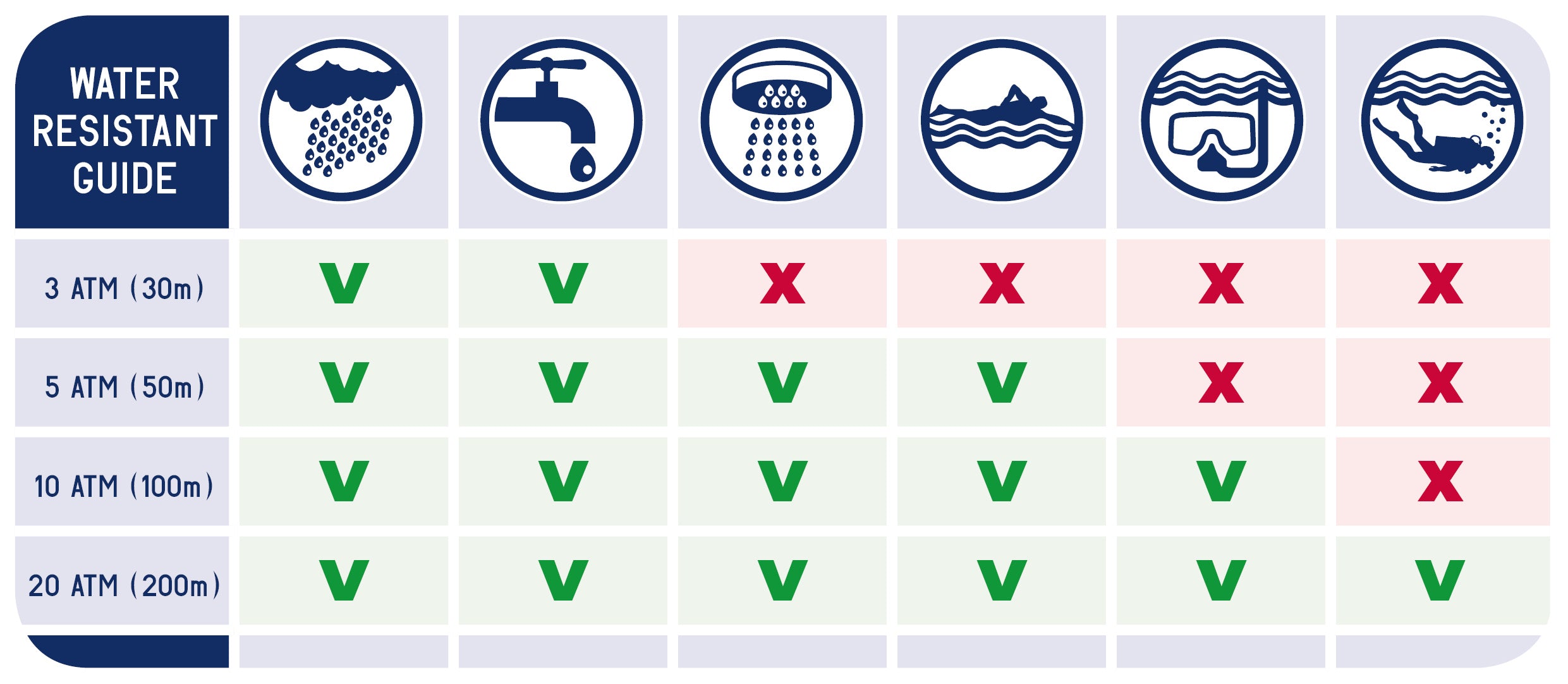
The first level (1 ATM), contrary to what one might think, simply allows resistance to splashes, snow, and light rain. These watches are not designed for swimming. When you move to 3 ATM, you can start to swim briefly, unless you enjoy taking risks. Diving, however, remains prohibited, as the water resistance is still too fragile.
From 5 ATM, you can start to really trust the water resistance of your watch, and you can afford to do prolonged swimming, snorkeling to explore accessible seabeds or even water sports such as water skiing which could damage your watch with less water resistance.
When you reach 10 ATM, you can do everything we mentioned above, including scuba diving to 30 meters, which is already equivalent to the level of an experienced diver, without worrying too much about your watch's water resistance. As you can see, above 10 ATM, you can do absolutely anything a person of average health is likely to do.
The ISO 6425 standard, certification allowing the product to be labeled a “Diving Watch”.
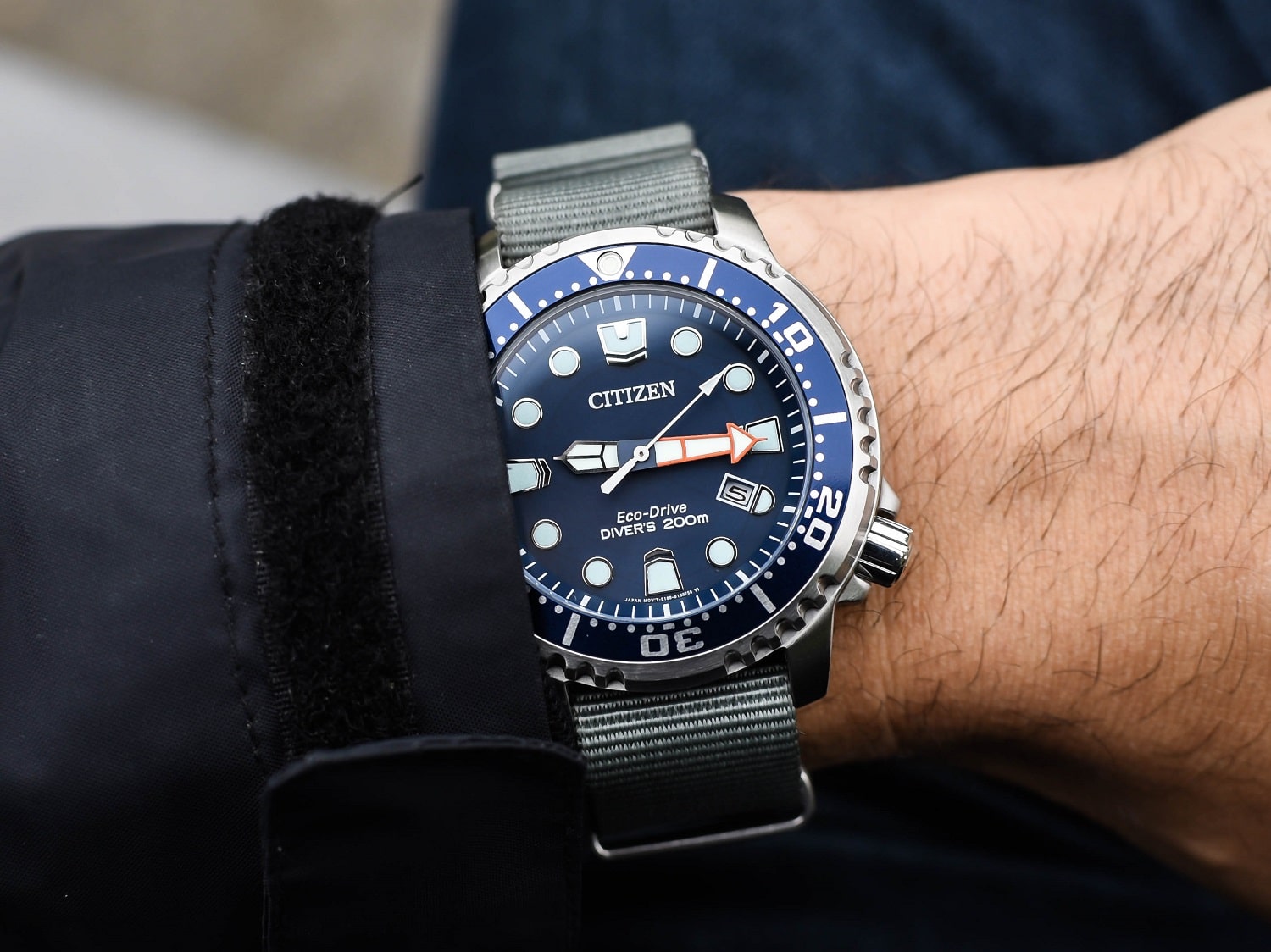
However, it is worth considering another, lesser-known aspect of water resistance in watchmaking: the ISO 6425 standard, which allows a watch to be labeled a "diving watch." This standard dates back to 1982 and has undergone four revisions, the most recent in 2018.
To be considered as such, the following conditions must be met: The watch must have a water resistance of 10 ATM, be equipped with a system allowing the measurement of diving time and be visible in the dark with in particular the presence of a bezel having at least 60 markings corresponding to the number of minutes in an hour.
Once the visual appearance is checked, the watch must undergo several tests. The first is a test of the watch's visibility and magnetic resistance. The second is a test of its resistance to temperature changes and corrosion. The third is the immersion test, which consists of a series of functional checks of the watch during two 24-hour immersions at a depth of 30 cm.
Finally, the watch undergoes a pressure test to determine what the "diving" watch is capable of. If these conditions are met, watch manufacturers are authorized to use the word "Diver" on the dial. Interestingly, most major watchmakers do not meet this ISO standard; indeed, professional watches like the Rolex Submariner or the Omega Seamaster do not feature the word "Diver" on their dials.
The mechanical prowess of the major companies for observing the seabed.
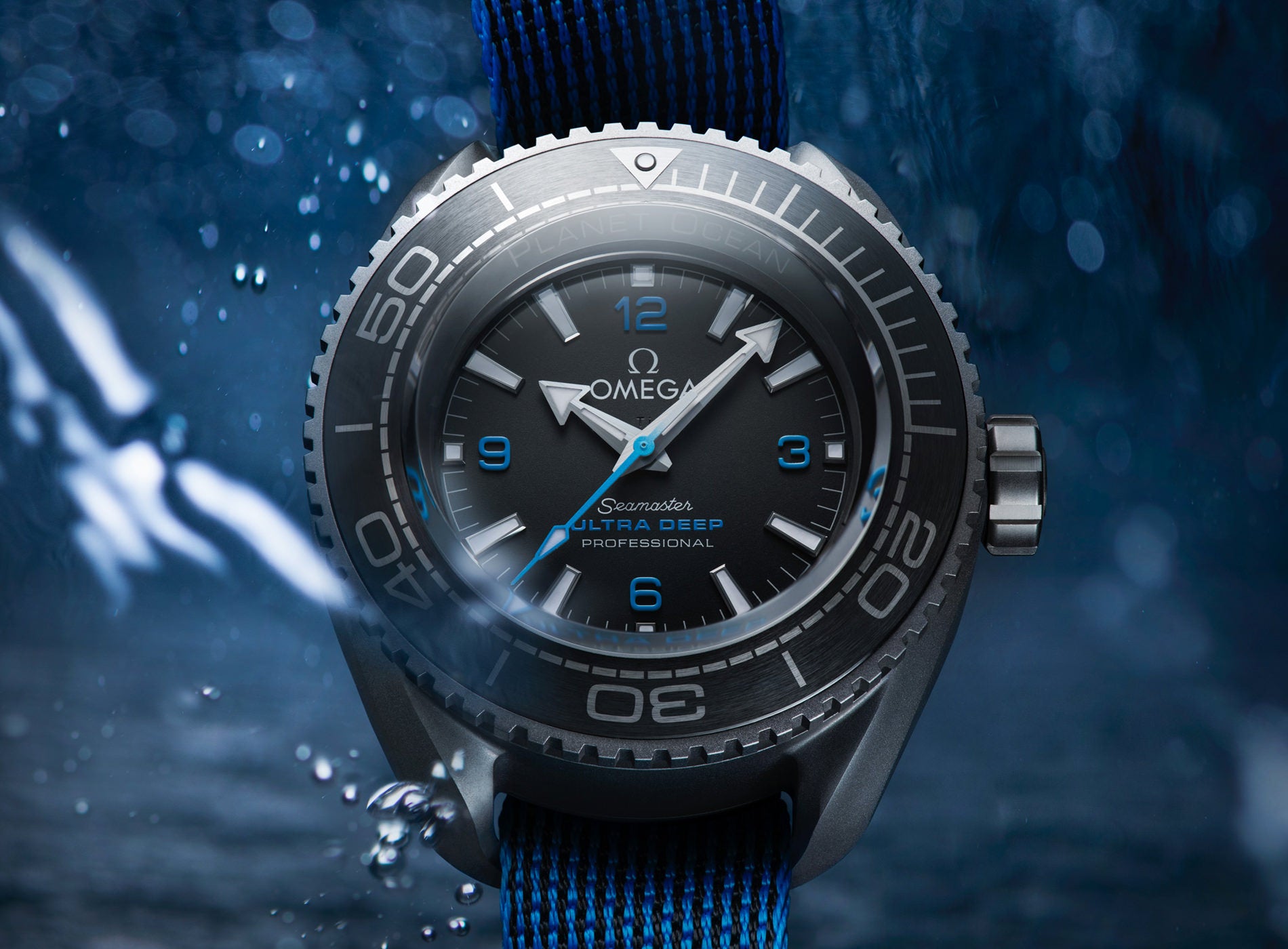
To satisfy the insatiable who are only interested in the exceptional, know that some companies are fighting to obtain the most waterproof watch possible, capable of exploring the darkest seabeds.
To date, the record is held by Omega thanks to its Planet Ocean Ultra Deep Professional which reached a depth of 10,928 meters in the Mariana Trench.
From a technical standpoint, this watch still has some room for improvement, offering water resistance up to 15,000 meters. Now you'll no longer be in the dark regarding the water resistance of a watch, and if we had to give you just one piece of advice: “When you go swimming with a watch, remember to screw the crown down tightly, because in 90% of cases, that's where water seeps into your beloved timepiece.”

,%20the%20movement%20(quartz,%20manual,%20or%20automa...)
Leave a comment
This site is protected by hCaptcha and the hCaptcha Privacy Policy and Terms of Service apply.